
Introducing a New Non-Invasive Treatment Option at Centered: TMS Therapy
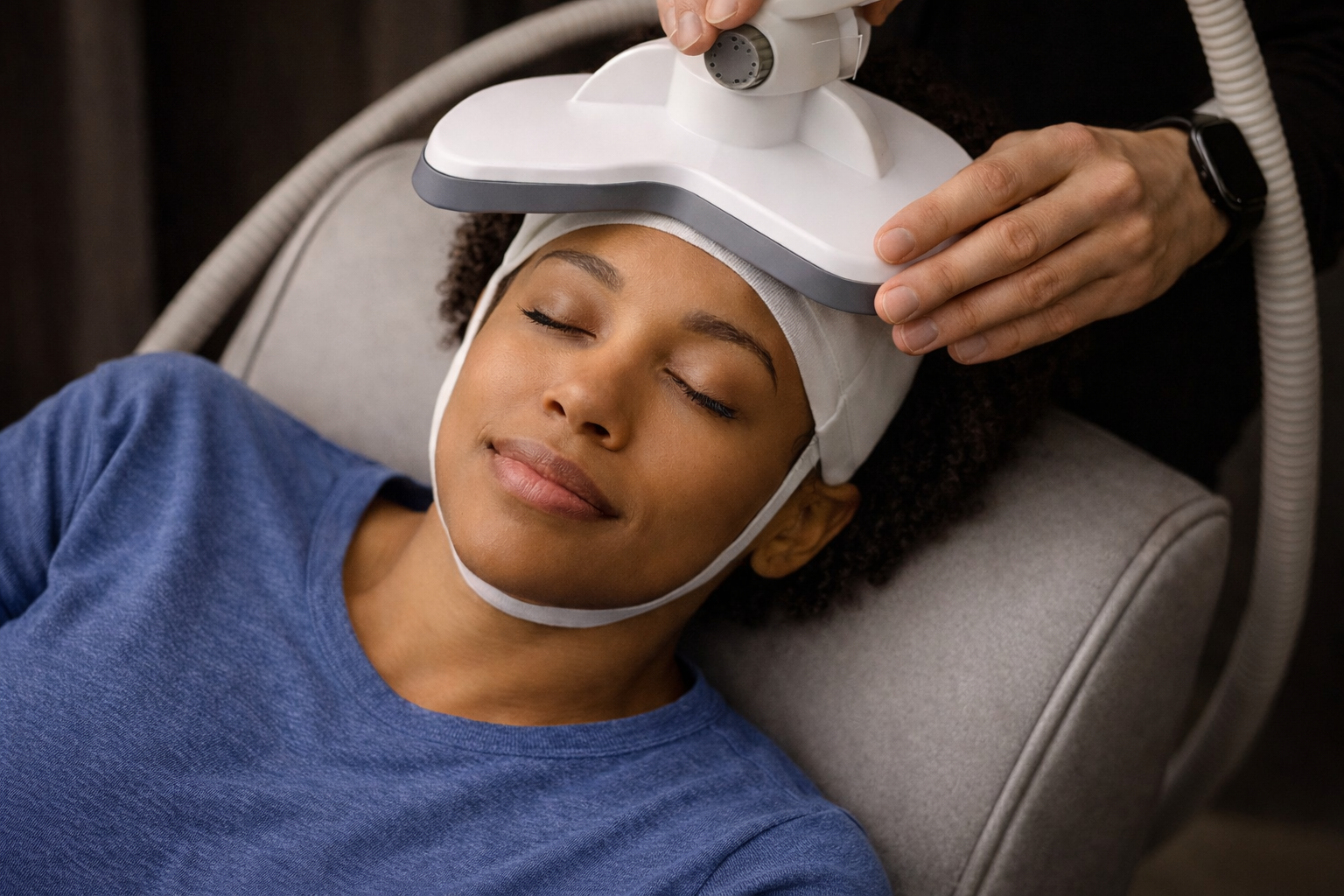
I’m writing to share some exciting news about an expansion of care at Centered. Over the coming weeks, we will be introducing a Transcranial Magnetic Stimulation (TMS) system—a non-invasive, evidence-based treatment that has helped many people who continue to struggle with mood and related symptoms despite thoughtful therapy, medication, and self-care.
What is TMS?
TMS is a gentle, non-surgical treatment that uses focused magnetic pulses to stimulate specific areas of the brain involved in mood regulation, motivation, and emotional resilience. These pulses help support healthier patterns of neural activity, particularly in brain regions that can become underactive in conditions such as depression.
What makes TMS different?
● It is non-invasive and does not require anesthesia or sedation
● Sessions are typically well tolerated, with minimal side effects
● It does not involve systemic medication, so there is no impact on digestion, liver function, or overall alertness
● You remain awake and can return to normal activities immediately after treatment
For some patients, TMS offers a meaningful option when medications have been only partially effective or difficult to tolerate. For others, it can complement psychotherapy, mindfulness practices, and other integrative approaches already in place.
Who might benefit?
TMS is most commonly used for treatment-resistant depression, but ongoing research and clinical experience suggest it may also be helpful for anxiety, trauma-related symptoms, obsessive-compulsive patterns, and certain cognitive or motivational difficulties. Whether it is appropriate for you is something we would explore together carefully and thoughtfully.
Our approach at Centered
As with everything we offer, TMS will be integrated into our broader philosophy of care: collaborative, individualized, and grounded in respect for your lived experience. This is not a “one-size-fits-all” intervention, nor a replacement for therapy or personal work, but another tool that may support healing and neuroplastic change.
Over the coming weeks, we will be offering informational consultations for patients who are curious about TMS or wondering whether it could be a good fit. These conversations are exploratory and educational—there is no pressure or obligation.
If you’d like to learn more or discuss whether TMS might be appropriate for you, please feel free to reach out to our office to schedule a consultation.
As always, thank you for the trust you place in us. It is a privilege to walk alongside you in your care.